

What do the results of Bulgarian students show, where do we stand compared with students from other countries participating in the assessment, and what is the role of technology and artificial intelligence? We sought answers from Albena Spasova, Chair of the Board of EdTech Bulgaria, and Albena Yotova, founder of the educational platform Intreea.
The results of PISA 2025 put Bulgaria before a serious challenge. But they also raise another question: are we looking for the causes of the problems in the right place?
In public debate, technology – and smartphones in particular – often become one of the main suspects. However, data from the Organisation for Economic Co-operation and Development (OECD) paint a more complex picture. Bulgarian students do spend significantly more time using digital devices for entertainment, but their use of technology for learning is close to the OECD average. This means the question is not simply how much technology students use, but what they use it for and how they use it.
What does PISA 2025 show about Bulgaria?
PISA does not simply measure whether students have mastered the school curriculum. The assessment examines whether 15-year-olds can apply their knowledge to real-life and unfamiliar situations, analyse information, make connections and solve problems.
In 2025, science was the main domain, while mathematics and reading were secondary domains. Bulgaria’s results were below the OECD average in all three areas. Only 53% of Bulgarian students reach at least Level 2 in science, compared with 74% across the OECD. In mathematics, the share is 43%, compared with 65% for the OECD, while in reading it is 42%, compared with an OECD average of 69%.
This means that more than half of Bulgarian 15-year-olds do not reach the basic proficiency level in mathematics and reading, while almost half remain below that level in science.
At the same time, Bulgaria also has high-performing students, but their share is significantly smaller than the OECD average: only 2% are top performers in science, 3% in mathematics and 1% in reading.
This highlights one of the major challenges facing the education system: it has capable and high-performing students, but it is not succeeding in ensuring a sufficiently high basic level for all.
The decline did not start in 2025
The OECD reports that in 2025 Bulgaria’s average results were lower than in 2022 in mathematics and reading and approximately unchanged in science. Compared with 2015, results have declined in all three areas. This shows that the problem did not emerge over the past one or two years.
There is another worrying indicator. Between 2022 and 2025, the share of students who say they are curious about many different things fell by 11.5 percentage points. The share of those who make an extra effort when a task becomes difficult fell by 11.3 percentage points.
Only 60% of Bulgarian students say they are curious about many different things, compared with 73% on average across the OECD, while 50% say they make an extra effort when facing difficulties, compared with 60% across the OECD.
The major gap is not only between Bulgaria and the OECD, but also within Bulgaria itself
One of the most significant findings concerns socioeconomic differences. In Bulgaria, students in the most advantaged 25% of the population outperform those in the least advantaged 25% by 101 points in science. The average OECD gap is 85 points. Socioeconomic status accounts for 14% of the variation in science performance in Bulgaria, compared with 12% across the OECD.
This shows that schools are not sufficiently effective in compensating for differences in the environments in which children grow up. And this is precisely where the PISA discussion needs to move beyond the question of whether students are good or bad. The question is how the system responds when a child starts falling behind.
What do the data show about technology?
The picture here is particularly interesting. Bulgarian students report using digital devices for learning at school for an average of 1.6 hours per day, compared with 1.7 hours across the OECD. For entertainment, however, they use digital devices for an average of 2.2 hours per day, compared with 1.1 hours across the OECD.
At the same time, 42% of Bulgarian students say their classmates are often distracted by digital devices during most or all science lessons, compared with 28% across the OECD. Students who report digital distraction score, on average, 12 points lower in science in Bulgaria.
Does this mean that technology is the cause of poor results? In fact, the data suggest something different: technology can be a tool for learning or a tool for distraction. It all depends on how it is integrated into the educational process.
Another telling indicator is that 41% of Bulgarian students use AI chatbots for learning at least once a week, compared with 46% across the OECD. Thirty percent use them for preliminary research on a new topic, 29% for summarising text, and 30% for creating text for written assignments.
Artificial intelligence is already part of learning. The question is whether it will be used to replace thinking or to develop it.
These are precisely the questions we explore with Albena Spasova and Albena Yotova.
9 questions about PISA 2025: Where is the problem and what can we change?
What do the PISA results actually show?
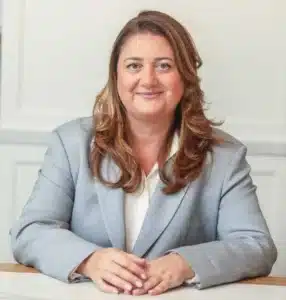
Albena Spasova, Chair of the Board of EdTech Bulgaria
PISA does not ask whether students have simply “covered the material”. It examines how well they can use their knowledge in different, including unfamiliar, situations. “For me, the conversation about PISA starts exactly here. Between completing the task and understanding its meaning. Between the correct answer and the ability to arrive at it on your own,” Albena Spasova explained.
According to her, the results should not be turned into a judgment about the intelligence of Bulgarian children. “I would not translate these numbers into the verdict that ‘our children are illiterate’. That is an offensive and inaccurate way to talk about them.” Rather, the results show that too many students fail to build a sufficiently solid foundation on which to continue learning and make independent decisions.

Albena Yotova, founder of Intreea
“For us, the PISA results reveal problems that have been developing in the education system for many years and are becoming more serious because they were not addressed at an early stage,” commented Albena Yotova. According to her, this is also linked to the education system’s insufficient adaptation to children’s different needs.
Why are the results in Bulgaria so low, and why have they declined compared with the previous assessment?
Albena Spasova
“I would not explain the results by pointing to a single culprit. Neither ‘smartphones’, nor ‘teachers’, nor ‘parents’ are sufficient answers,” said Albena Spasova. According to her, the problem is deeper and is linked to inconsistencies between the different elements of the system. “My assessment is that the problem lies in the inconsistencies between what we want, what we teach, what we assess and what we support.”
Albena Yotova
Yotova also sees problems accumulating over time. According to her, we cannot look at a child solely through the lens of school. She emphasises the broader environment – physical, emotional and mental health, lifestyle, physical activity and other factors. “We cannot look at a child only in terms of their life at school. We need to look at the whole picture, at their overall health – emotional and mental health – so that a child can develop well and fully.”
Where is the problem?
Albena Spasova
The problem is systemic, according to her. “We want independent thinking, but when assessment depends primarily on reproducing information, we send a different signal. We want an individual approach, but that requires time, people and appropriate materials. We want teachers to introduce new methods, but one-off training is not the same as having a colleague with whom you can discuss why a particular lesson did not work. We cannot place all these expectations on the teacher’s desk and call that reform,” she said.
Albena Yotova
Yotova emphasises the strong reliance on textbooks and the insufficient freedom given to teachers. “In practice, the Bulgarian education system still relies on specific textbooks, even though competencies have been defined and a competency-based approach is being discussed.” According to her, this does not sufficiently accommodate the different ways in which children process information. “We can process information kinesthetically, auditorily, visually, and when a textbook is written in a dry, academic way, it is not suitable for a sufficiently large number of children.” In her view, the issue is not that children cannot learn, but that they cannot learn effectively in this environment. We need to understand what kind of environment will enable them to succeed.
Bulgaria has students who achieve very high results, but why are we failing to ensure a sufficiently high basic level for everyone?
Albena Spasova
“I would not want the discussion about low performance to diminish the efforts of high-performing students and their teachers. But I would also not want their success to become a comforting answer for everyone else,” Spasova commented. According to her, we can develop talent while also insisting that every child receives a solid foundation. “These are not competing tasks,” she said. But the system must be able to compensate for differences. “For me, fairness does not mean giving everyone exactly the same thing and then comparing them. It means providing the support they need so that they can reach a common, sufficiently high basic level.”
Albena Yotova
According to Albena Yotova, the lack of personalisation is one of the main problems. Leading education systems are significantly more individualised. Teachers have much greater freedom in choosing learning materials and resources and can adapt their approach to individual children.
Another key point, according to her, is that weaknesses need to be identified and no child should be allowed to fall behind. “For me, it is important to identify where the problem begins and work systematically. We need to see which are the weakest links in the system and provide an individual development path precisely for the children who need the most support.” According to Yotova, the system should respond to the first signs of difficulty, rather than waiting until learning gaps have become serious.
What can we learn from the top-performing systems – Singapore, Japan, Korea, Estonia and others?
Albena Spasova
It is not a matter of one magic recipe that can simply be copied. “OECD analyses of high-performing education systems highlight consistent goals, high expectations for students, strong teacher preparation, and alignment between curricula, teaching and assessment. These are different systems, but their success cannot be reduced to a single method or device,” Spasova commented, adding: “I would not mechanically copy their school day or exam pressure. I would borrow their focus on the quality of everyday teaching.” In her view, the most important lesson is to combine high expectations with genuine support. Every child should have the opportunity to progress, but when this does not happen, the system needs a mechanism to respond.
Albena Yotova
“The most important thing is the relative freedom teachers have to decide which teaching materials and approaches to use,” Yotova explained. According to her, leading systems are significantly more personalised and allow greater freedom for different approaches. “If we orient the education system much more towards skills and competencies, they can be achieved in many different ways.”
For her, teacher autonomy and individualisation are once again key. “The lessons in a mathematics textbook do not have to be structured in exactly one particular way, nor do specific skills have to be mastered in exactly the same way.”
Estonia is among the top-performing countries. What explains its success?
Albena Spasova
Estonia shows that digitalisation alone is not enough. What matters is how the system is organised, how teachers are prepared and whether schools have the ability to adapt their approaches.
Albena Yotova
“The model there is much more decentralised and teachers have considerably more freedom in the approaches they use,” Yotova explained. In her view, this freedom is one of the practices Bulgaria could learn from.
What should the proper use of technology in schools look like?
Albena Spasova
According to her, we should not measure the success of digitalisation by the number of devices or the amount of time spent in front of screens. Technology should create more space for creativity, movement, experimentation and work on real-world problems. The question is how children’s everyday school experience is organised and whether schools offer enough meaningful activities to engage their attention.
Albena Yotova
“There should be far more kinaesthetic activities in schools and far more projects – in other words, many more tasks involving real-world problem-solving and many more creative tasks,” she believes. According to her, children should not be restricted from using digital technologies; instead, they should be guided towards using them appropriately.
Is AI already perceived as a natural learning tool?
Albena Spasova
According to her, the question is not whether a student uses AI, but how they use it. Asking artificial intelligence “Write my analysis for me” is one thing; saying “Here is my analysis. Help me identify its weak points and ask me questions so I can improve it” is something completely different. The goal is for the student to remain the active participant in the process.
If a machine can generate a convincing answer within seconds, the task of education is to teach students how to evaluate that answer. According to her, critical thinking is important, but it cannot exist without knowledge. Students need to be able to compare sources, verify claims, distinguish fact from opinion and ask questions. But they also need to understand the subject they are dealing with. “For me, the goal is not for students to choose between their own thinking and AI. The goal is for them not to give up their own thinking when they use AI.”
Albena Yotova
According to her, AI has significant potential precisely in personalised learning. “For me, it is very important to have an algorithm that identifies the specific needs, the specific learning style, and the specific gaps or needs of a child.” But leaving a child alone with artificial intelligence is not enough. AI needs to be part of an overall pedagogical process and integrated into algorithms and learning pathways that lead to a specific outcome.
PISA 2025 shows declines in performance in many countries. Does this mean we are facing a global crisis in the education model, rather than just a Bulgarian problem?
Albena Spasova
International results show that the problem is indeed broader than Bulgaria. But this does not mean that Bulgaria’s results can be explained solely by a global trend. “I would accept neither ‘it is only like this here’ nor ‘it is like this everywhere, so there is nothing we can do’,” Spasova said. According to her, education systems need to adapt to an environment in which the ways children receive information, learn and interact with technology are changing very rapidly.
Albena Yotova
She also sees a global problem, but believes that “Bulgaria is a more extreme case.” And this is precisely where she sees an opportunity: “Sometimes things need to reach a very low point before a faster change can be unlocked.”
Technology is not the solution. But it can be part of it
The data from PISA 2025 do not provide grounds for blaming technology for the weak performance of Bulgarian students. Bulgarian students use digital devices for learning almost as much as their peers across the OECD. At the same time, their use of devices for entertainment is twice as high. Digital distraction is associated with lower performance, but moderate use of technology for learning can be beneficial.
This means that the question is not “technology or no technology”. The question is whether the education system knows what it wants to achieve with technology. Technology can help teachers personalise learning, identify gaps, provide additional exercises and free up time for work that requires human interaction.
But technology cannot solve a systemic problem on its own. Perhaps the most important lesson from PISA 2025 for Bulgaria, therefore, is not to choose between the textbook and the tablet, or between traditional education and AI. It is to build a system in which every child receives timely support; teachers have the freedom and resources to choose the right approach; technology is used where it creates real added value; AI supports learning without replacing it; and critical thinking, curiosity and the ability to apply knowledge become genuine goals of education.
Picture: Pixabay


