Three school teams from the Bulgarian capital presented their ideas for a more accessible and greener urban environment in the final round of the competition organised by EdTech Bulgaria.
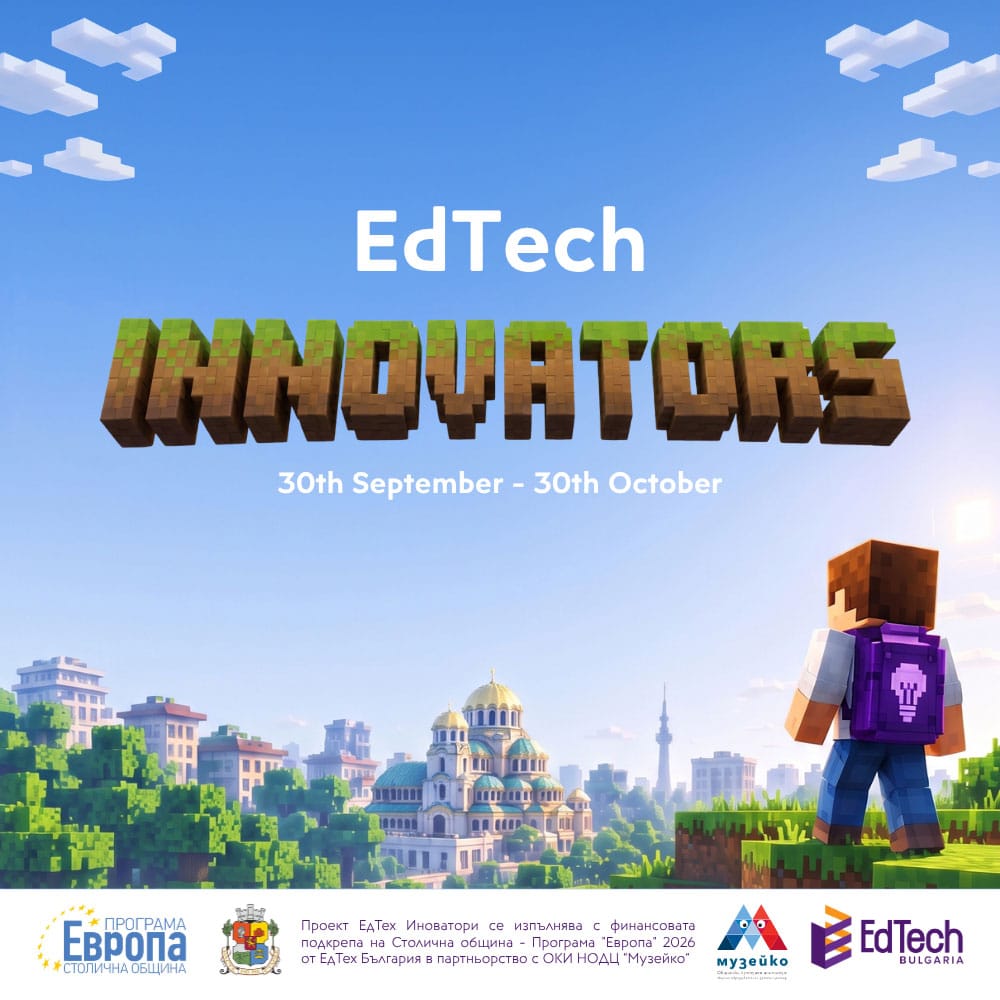
Can Minecraft help children imagine a better Sofia? In the second edition of “EdTech Innovators 2026: Virtual Sofia, Real Future”, the answer came from the students themselves. The final round of the competition, organised by EdTech Bulgaria with the support of Sofia Municipality under the Europe Programme 2026, took place on 30 October at Muzeiko – Sofia’s Children’s Science Centre.
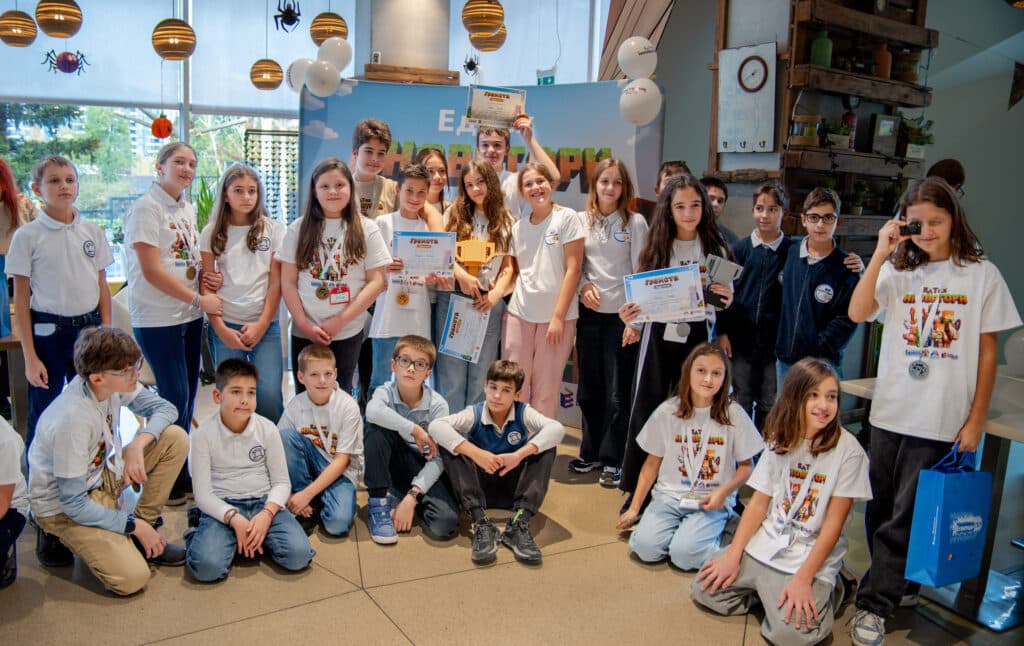
The winning team was from 68th Secondary School “Acad. Nikola Obreshkov”, comprising sixth-grade students led by Nadji Hadzhieva. Second place went to the team from 120th Primary School “G. S. Rakovski”, with fifth-grade students led by Anatoli Nikolov. Third place was awarded to the team from the Private School “Educational Technologies”, comprising fifth-grade students, teacher Petya Nedelkova and team leader Ema Valchinkova.
The three teams were challenged to complete the mission “A City for Everyone” – creating an urban environment that is more accessible, greener and more enjoyable for all. Within 90 minutes, they had to build on the virtual worlds they had created during the first stage of the competition in Minecraft Education, applying two of the principles developed by Danish architect and urbanist Jan Gehl: accessibility and green spaces. Their task was to design spaces that meet the needs of different people and create a better living environment.
“When we give children the opportunity to work on real-world challenges, we help them see that their ideas matter. Through EdTech Innovators, we want to encourage not only their interest in technology, but also their ability to think critically, find solutions and become active participants in shaping the environment around them,” said Albena Spasova, Chair of the Board of EdTech Bulgaria.
“It is important to include children’s voices in the process, because this allows us to see the environment from the perspective of the people who live in it every day,” said Tsvetelina Simeonova-Zarkin, Chair of the Europe Programme, who was among the official guests at the final. She highlighted the importance of initiatives that encourage children to take part in discussions about creating a sustainable, attractive and inclusive urban environment.
The competition took place in two stages. Over the course of one month, 10 teams developed innovative solutions for Sofia’s urban environment using the Minecraft educational platform. The three top-performing teams advanced to the final. One week before the event, they received the task brief and assessment criteria, allowing them to plan their approach, assign roles and prepare their ideas independently.
On the day of the event, the teams brought their concepts to life and presented their solutions to a four-member jury. The jury comprised Teodora Vavova, Learning Effectiveness Expert at Enlayer; Veselin Georgiev, Technology Expert at Enlayer; Silvia Chakarova, urbanist and founder of place.make studio; and Radoslav Parushev, a student at the Technological School “Electronic Systems” (TUES) at the Technical University of Sofia and a finalist in last year’s competition. The jury assessed not only the final results, but also how the teams planned their work, collaborated and presented their solutions.
In addition to trophies for the teams and medals and certificates for each student and team leader, the finalists received gifts and access to educational resources from Prosveta Publishing House, Klett Publishing House, the Human Resource Development Centre and AMA Coach.
Official guests at the final included representatives of the Ministry of Education and Science, Sofia Municipality, the Pernik Regional Administration, the Faculty of Education at Sofia University, as well as members and partners of EdTech Bulgaria.
“I would like to thank Sofia Municipality for its support, all our partners, the members of EdTech Bulgaria and the T’each’One team for their commitment and contribution to making this initiative possible. We believe that projects like this should continue and reach more and more children and schools. With each new edition, we hope to build on what has been achieved, expand our partnerships and give even more students the opportunity to turn their ideas into solutions for the world around them,” added Albena Spasova.
“EdTech Innovators 2026: Virtual Sofia, Real Future” is the second edition of the initiative launched by EdTech Bulgaria. The project is implemented in partnership with Muzeiko – Sofia’s Children’s Science Centre, with financial support from Sofia Municipality under the Europe Programme 2026.